
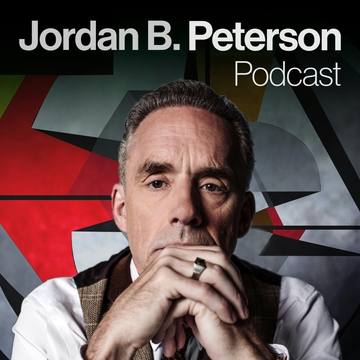
Whole-show assessment
The Jordan B. Peterson Podcast
Jordan B. Peterson
USEFUL ADVICE EARNS TRUST FOR MUCH WEAKER CLAIMS
Peterson's sensible advice is what gives his weaker claims authority. Clarity and personal responsibility often disappear exactly where his political worldview most needs them.
This is editorial opinion about recurring patterns across the show, not a claim that every episode shares every fault. We assess the guests, framing, questions, challenges, context, corrections and distribution choices visible in the published work—without claiming a secret agreement or motive. Examples are factual anchors, and reported allegations are labeled as such.
Why it is popular
- Peterson speaks directly to people who feel lost, ashamed or ignored and offers a story in which improvement is possible.
- Much of the basic advice—take responsibility, build routines, speak honestly and repair your life—is sensible.
- His psychology background, professorial style and wide vocabulary make ordinary advice feel part of a grand system.
- He gives young men a heroic role instead of simply telling them they are privileged, angry or broken.
Why it sucks
- The useful advice becomes a bridge to much weaker political, historical and scientific claims.
- Peterson moves from psychology into law, climate, theology, economics and history without lowering his certainty.
- He stacks possibilities and metaphors until they point toward a conclusion, then often avoids stating that conclusion clearly enough to test.
- He demands precise speech and personal responsibility from others while answering criticism with exaggeration, grievance and persecution stories.
- “Open inquiry” is not neutral when preferred contrarians receive patient affirmation while institutions and critics face suspicion from the first question.
How it makes you dumber
- It teaches listeners to mistake complicated language for a complete argument.
- A story that feels morally meaningful starts to count as proof that it is factually true.
- Listeners learn to search for hidden ideological control before checking simpler explanations such as error, disagreement or ordinary limits.
- Several plausible statements are joined without testing whether they can all be true together.
- The useful majority of the material lowers your guard toward the smaller set of claims with far greater political and social consequences.
The reasoning tricks it uses
- Words such as truth, religion, Marxism and postmodernism shift meaning while appearing to support one continuous argument.
- A dramatic claim is advanced, but criticism is answered with a much milder point that few people dispute.
- A limited law, policy or social change becomes the first step toward totalitarian control.
- Broad movements are reduced to their weakest or most extreme representatives.
- Criticism from an institution becomes more proof that the institution is captured, making the story hard to disprove.
How it spreads bad information
- Climate scientists have repeatedly found that Peterson misunderstands climate models and repeats false or misleading claims about carbon dioxide and warming.
- His public rise relied partly on an interpretation of Bill C-16 that Canadian legal experts disputed; the law did not simply criminalize using an unwanted pronoun.
- The show gave Robert F. Kennedy Jr. room to spread vaccine and environmental claims without the scrutiny their medical importance demanded.
- The strongest counter-case is often missing. Fringe objections receive hours while scientific or legal agreement becomes a vague, distrusted institution.
- A sweeping abstract claim is cheap to make, while finding every changed definition, omitted fact and contradiction is exhausting.
Who it helps look credible
- Peterson selects contrarian guests, introduces them as courageous and often begins from their story of persecution before the failed claim or financial interest is explained.
- Repeated climate contrarians create the impression of a large scientific dispute that does not reflect the field as a whole.
- When YouTube removed his Kennedy interview under its medical-misinformation rules, Peterson framed the event mainly as censorship rather than confronting the claims' reliability.
- A guest's claim can be normalized through agreement, silence or an omitted counter-case even when Peterson never states that he endorses it.
- His psychology credentials and intellectual setting transfer status to guests and subjects far outside psychology.
How it benefits at your expense
- In 2022, Daily Wire announced that it had acquired sales and distribution rights to the podcast and would sell bonus and subscriber-only Peterson content.
- A permanent culture crisis creates permanent demand for books, lectures, subscriptions and courses promising order.
- The audience receives enough useful advice to preserve trust, then spends hours sorting claims that are vague, unsupported or outside Peterson's field.
- Every objection can deepen loyalty by becoming proof that Peterson is fighting a captured system for the listener.
- Listeners may feel more responsible while learning to excuse inconsistency and weak accountability from the authority teaching it.
What it keeps teaching underneath
- Hierarchy is treated as natural and therefore broadly justified, with too little attention to abuse or inherited power.
- Personal responsibility is emphasized so heavily that social and institutional causes of harm can disappear.
- Traditional gender roles receive a scientific or mythic glow, while alternatives are linked to disorder and decline.
- Peterson describes his regulator dispute as forced ideological re-education. The court upheld the regulator's authority and found its reasoning reasonable; it did not ban his political opinions.
- The stated ethic is accountability. The repeated exception is Peterson, his allies and the real-world results of their preferred story.
Why well-read critical thinkers steer clear
- A single argument can require checking shifting definitions plus historical and scientific claims from fields Peterson does not specialize in.
- The useful advice is available more directly from clinical sources without the attached culture-war system.
- Selective guest scrutiny, missing counter-cases and weak corrections make the show an unreliable filter between evidence and assertion.
- Original texts, field experts and interviews where informed opponents challenge each other provide more clarity with far less decoding.
Sources and factual anchors
- Turning 38: the author's Peterson critique
- Turning 40: testing claims for coherence
- Science Feedback on Peterson's climate claims
- University of Toronto legal analysis of Bill C-16
- Ontario Divisional Court judgment
- NPR on Kennedy's claims and the removed interview
- Daily Wire's 2022 Peterson deal announcement
Sources anchor specific factual examples. The overall assessment and conclusions are editorial opinion.