
Whole-show assessment
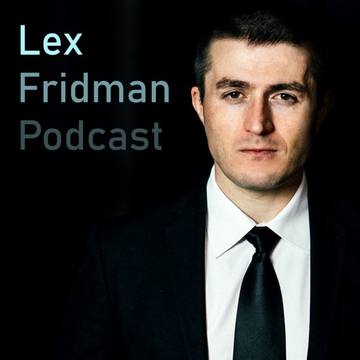
Lex Fridman Podcast
Lex Fridman
A CALM INTERVIEW CAN STILL BE SOFT PUBLIC RELATIONS
Long conversations with important people look like depth. When powerful guests never face the missing evidence or consequences, the result is often public relations stretched to three hours.
This is editorial opinion about recurring patterns across the show, not a claim that every episode shares every fault. We assess the guests, framing, questions, challenges, context, corrections and distribution choices visible in the published work—without claiming a secret agreement or motive. Examples are factual anchors, and reported allegations are labeled as such.
Why it is popular
- Fridman is calm, polite and patient in a media world built around shouting.
- His guests include major scientists, founders and political leaders whom audiences rarely hear at length.
- Questions about love, suffering and meaning make powerful people seem open and human.
- His MIT research role, technical background and serious presentation give the whole show an intellectual glow.
Why it sucks
- Saying he is not a journalist does not remove Fridman's editorial role. He still chooses which leaders reach millions and what questions they face.
- He often replaces scrutiny with empathy. Understanding why someone believes a claim does not show that the claim is true.
- Long answers remain in the published conversation without the missing history, evidence or affected voices needed to judge them.
- Access becomes its own success measure. The safer the interview is for a powerful guest, the easier it is to attract the next one.
How it makes you dumber
- It teaches that a calm voice is neutral and a friendly conversation is honest.
- Fame and professional success begin to stand in for expertise, integrity and reliable evidence.
- Duration is confused with depth. Three hours of untested self-description can reveal less than twenty minutes of prepared questioning.
- Listeners are told to make up their own minds without first receiving the facts needed to do so.
- Scientific guests lend a general feeling of rigor that carries into political interviews where the claims are not tested scientifically.
The reasoning tricks it uses
- Incompatible claims can receive similar status because both speakers sound sincere.
- A title, company or public office carries claims far beyond the guest's actual expertise.
- Criticism from both political camps is treated as proof that the work must be balanced.
- “Is this true?” becomes “What pain or hope made you believe it?”
- The true point that everyone is human becomes a shield against judging choices, lies or harm.
How it spreads bad information
- A Columbia Journalism Review feature documented repeated cases in which Fridman gave false claims little or no effective challenge.
- During the Trump interview, Fridman tried to correct one false label for Kamala Harris by repeating another false claim about her father, then moved on.
- The same review describes an unsupported Robert F. Kennedy Jr. claim about CIA funding of journalism receiving little challenge.
- A false claim does not become safer because it was delivered slowly, politely and at length.
- The show lacks a clear correction layer strong enough to catch up with claims distributed through full episodes and viral clips.
Who it helps look credible
- Leaders can replace their public record with a warm, carefully chosen personal story.
- Repeated interviews with figures such as Elon Musk build familiarity without equal attention to workers, critics, regulators or people affected by their decisions.
- Political figures who avoid demanding interviews can reach millions in a setting where they control most of the narrative.
- Praise, empathetic reframing and silence can transfer trust even when Fridman never explicitly endorses the guest's account.
- Love and understanding can flatten the crucial difference between hearing a person and accepting that person's account.
How it benefits at your expense
- Friendly access produces famous guests; famous guests produce views, sponsors and more access.
- Guests receive reputation repair without the risk of a prepared accountability interview.
- The audience spends hours consuming a curated self-portrait while believing it heard the full case.
- Scientific guests lend status to political episodes, while political celebrity grows the whole platform.
- Your time becomes the price of a format that feels complete precisely because the missing case stays invisible.
What it keeps teaching underneath
- Neutrality in tone is treated as neutrality in effect. A passive interviewer usually helps the person who already has more power.
- The show favors a “great man” view in which founders and leaders explain history through their own intentions.
- Love and optimism can become ways to avoid anger that is justified by evidence or harm.
- Criticism is folded into a story about a divisive media machine, leaving less room to ask whether the criticism is accurate.
- Fridman's PhD and MIT research role are real. He is not an MIT professor, and technical credentials do not make political claims true.
Why well-read critical thinkers steer clear
- Three hours of a leader's self-description can require additional hours to recover the missing record and test the claims.
- Calm delivery, Fridman's technical credentials and his MIT association make it unusually easy to mistake access for depth and courtesy for verification.
- When the host supplies no strong counter-case, the listener must build one independently after a consequential interview.
- Prepared accountability interviews, original records and subject specialists provide a more efficient path to understanding powerful people.
Sources and factual anchors
- Columbia Journalism Review's detailed analysis
- Official Donald Trump transcript
- Official description of Fridman's role and research
- FactCheck.org on Kennedy's vaccine claims
Sources anchor specific factual examples. The overall assessment and conclusions are editorial opinion.