
Whole-show assessment
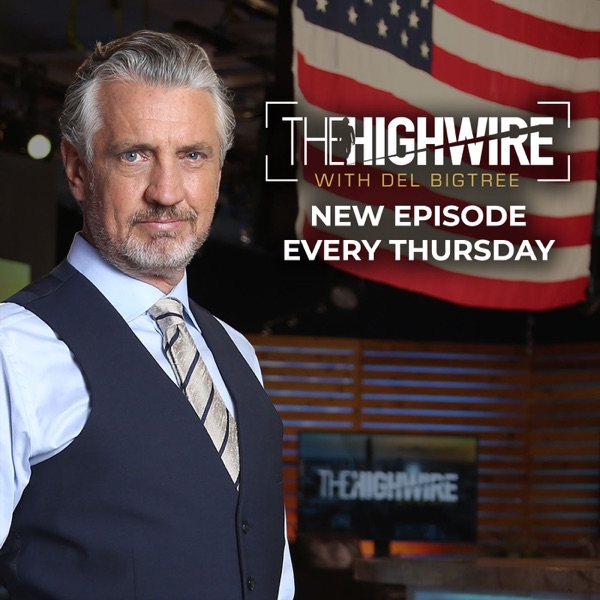
The HighWire with Del Bigtree
Del Bigtree
SELECTIVE EVIDENCE MAKES ITS VACCINE STORY IMPOSSIBLE TO DISPROVE
The show presents itself as a public-health watchdog, but it applies aggressive doubt to vaccines and institutions while giving weak studies, alarming anecdotes and anti-vaccine guests much less scrutiny.
This is editorial opinion about recurring patterns across the show, not a claim that every episode shares every fault. We assess the guests, framing, questions, challenges, context, corrections and distribution choices visible in the published work—without claiming a secret agreement or motive. Examples are factual anchors, and reported allegations are labeled as such.
Why it is popular
- Bigtree is a skilled television producer who turns difficult medical and legal material into an urgent, easy-to-follow story.
- The show addresses real concerns about drug-company power, regulatory mistakes, vaccine injuries and informed consent.
- Patients and parents who feel ignored receive time, sympathy and a public voice.
- The show publishes source links and has a written protocol promising corrections within four weeks, which are useful practices in principle.
- Viewers are told they can read documents and challenge authorities themselves, creating a strong feeling of agency.
Why it sucks
- Bigtree is a television producer and activist, not a physician or vaccine scientist. His medical conclusions therefore require the same source-checking as any other non-specialist's interpretation.
- Regulators and established studies face extreme suspicion while guests who support the show's vaccine story receive warm introductions and much softer follow-up.
- The show's publisher, ICAN, says its editorial protocol should serve a mission to “eradicate man-made disease.” That declared mission creates a built-in risk of selecting evidence that confirms the organization's starting view.
- Providing many links is not the same as weighing evidence fairly; weak papers and isolated cases can sit above stronger studies the episode leaves out.
- As of 6 August 2026, the cited autism pages still used “landmark” and CDC “walk-back” framing and did not link the later WHO evidence review where new viewers met those claims.
How it makes you dumber
- A health problem that follows vaccination begins to feel as though it must have been caused by vaccination.
- One alarming study or patient story can outweigh larger research involving millions of people.
- Normal scientific uncertainty is treated as evidence that officials cannot support any safety conclusion.
- Technical language, documents and medical titles create the feeling that a claim has survived expert review when it may not have.
- A real institutional mistake becomes a reason to distrust unrelated findings from many other researchers and countries.
The reasoning tricks it uses
- The show demands proof that a vaccine could never contribute to any harm, a standard no medical treatment or scientific claim can meet.
- Rare vaccine risks receive close attention while the disease risks prevented by vaccination receive much less space.
- Raw adverse-event reports are presented as alarming totals even though anyone can report and the database cannot establish cause by itself.
- The false choice is The HighWire's account or blind faith in pharmaceutical companies and government.
- If a study finds harm, it is treated as suppressed truth; if it finds safety, funding, methods or institutions are used to dismiss it. The claim therefore becomes very hard to disprove.
How it spreads bad information
- In June 2020, Bigtree told most viewers they should “actually catch” COVID-19 and described it as a common cold. COVID had already killed more than 100,000 Americans, and YouTube removed the channel the following month.
- In October 2025, The HighWire called a McCullough Foundation report a “landmark new study” linking vaccination to autism. A December 2025 WHO review of 31 primary studies published through August 2025 found no causal link between vaccines and autism.
- The show later treated the CDC's November 2025 vaccine-autism rewrite as vindication. AP reported that outside experts said the rewritten page distorted the evidence, and WHO reaffirmed the no-link finding weeks later.
- A January 2025 episode invited viewers to reconsider Andrew Wakefield's record. His Lancet paper was retracted, and the BMJ concluded that the article linking MMR and autism was fraudulent.
- In episode 230, Bigtree read raw VAERS death and hospitalization totals, then treated those reports as vaccine deaths that regulators had failed to explain. CDC states that a VAERS report does not show causation and cannot by itself measure risk.
Who it helps look credible
- Andrew Wakefield receives a full “real story” treatment that places the case against him inside a tale of institutional persecution.
- In the cited October 2025 appearance, Peter McCullough is presented through medical titles and “landmark” framing without equal weight for the broader evidence reviews rejecting a vaccine-autism link.
- Emotional patient accounts can transfer trust to the show's causal explanation even when the story cannot establish what produced the illness.
- Platform removal, professional criticism and journal rejection are often reframed as signs that a guest threatens powerful interests.
- Booking alone is not endorsement, but titles, introductions, supportive questions and missing counterevidence can rehabilitate a rejected claim before viewers examine the record.
How it benefits at your expense
- ICAN's 2023 tax filing reported $23.2 million in revenue, almost all from contributions. The show and its donation-supported publisher operate inside the same attention system.
- That financial record does not prove a medical claim was made for money, but recurring alarm gives supporters a continuing reason to donate.
- Viewers bear the health risk if fear of vaccination outweighs the documented danger of measles, polio, pertussis or COVID-19.
- A nonexpert can spend days checking one episode's papers, adverse-event reports and missing comparison data.
- The show keeps attention and support while viewers are left with greater fear and less trust in doctors able to assess their individual medical risk.
What it keeps teaching underneath
- Medical institutions are treated as corrupt by default, while outsiders are treated as credible because institutions reject them.
- Personal testimony is allowed to compete with population evidence as though the two answer the same question.
- Natural infection is repeatedly made to look cleaner or more honest than prevention, even when infection carries serious avoidable risk.
- Public-health action becomes a story about control, leaving little room for the rights of people exposed to preventable disease.
- Criticism can strengthen the truth-teller identity instead of creating a clear point at which the show would admit it was wrong.
Why well-read critical thinkers steer clear
- Checking a medical claim requires reading the whole study, its comparison group, later reviews and the disease risk the episode omitted.
- Several hours of alarming interpretation usually offer less dependable guidance than a short evidence review or discussion with a relevant clinician.
- The declared mission, repeated guest pool and one-sided doubt make the show an unreliable filter between a possible safety concern and a proven cause.
- WHO evidence reviews, National Academies reports, original regulator documents and qualified medical specialists provide safer ways to examine the same questions.
Sources and factual anchors
- Official HighWire site and description
- The HighWire's published editorial and correction protocol
- Official October 2025 McCullough vaccine-autism episode
- Official January 2025 Andrew Wakefield episode
- Official transcript of episode 230 and its VAERS presentation
- WHO's December 2025 review of vaccines and autism
- National Academies review of vaccines and autism
- CDC explanation of what VAERS can and cannot establish
- BMJ report on the Lancet's Wakefield retraction
- BMJ editorial finding the Wakefield article fraudulent
- AP on the disputed November 2025 CDC vaccine-autism rewrite
- Official HighWire segment framing the CDC rewrite as a walk-back
- The Atlantic's February 2026 profile and Bigtree's responses
- Peer-reviewed analysis of recurring COVID-19 themes on The HighWire
- ICAN tax filings through ProPublica Nonprofit Explorer
Sources anchor specific factual examples. The overall assessment and conclusions are editorial opinion.